
State License Number #30725 & #30306

Author: Spire Advertising

Should You “Burp” Your House? When Opening Your Windows Helps—and When It Hurts

If you’ve been on social media lately, you may have heard of a trend called “house burping.” The idea is simple: open all your windows (and sometimes doors) at once for a short period of time to flush out stale indoor air and bring in fresh air.

It sounds refreshing—and in some cases, it is. But is “burping” your house actually beneficial? And could it ever do more harm than good?

Let’s break down when this trend works—and when your HVAC system should be doing the heavy lifting instead.

» SCHEDULE SERVICE


What Does It Mean to “Burp” Your House?

“House burping” is essentially a quick air exchange.

Homeowners open windows throughout the house—ideally on opposite sides—to create cross-ventilation. This allows fresh outdoor air to push out stale indoor air, odors, and lingering pollutants.

Most recommendations suggest doing this for about 10–30 minutes at a time.

It’s a simple, no-cost way to make your home feel fresher—but it’s not always the best solution.


When Opening Your Windows Helps

There are definitely times when “burping” your house can be beneficial—especially during mild weather.

Here’s when it works best:

1. During Spring and Fall
Cooler, moderate temperatures make it easy to refresh your home without overworking your HVAC system.

2. When Humidity Is Low
Dry outdoor air can help reduce that heavy, stale feeling inside your home.

3. After Cooking or Cleaning
Opening windows can quickly clear out strong odors, smoke, or chemical smells.

4. For a Quick Refresh
Sometimes your home just feels stuffy. A short burst of fresh air can make a noticeable difference.

When done properly, this method can temporarily improve comfort and air freshness.


When “House Burping” Can Backfire

While the idea sounds harmless, there are several situations where opening all your windows can actually make your home less comfortable—or even create new issues.

1. High Humidity Days
In Northeast Ohio, humidity can be a major factor. Opening your windows on a humid day can bring in excess moisture, making your home feel sticky and forcing your HVAC system to work harder later.

2. Allergy Season
If pollen counts are high, “burping” your house can invite allergens inside—triggering symptoms and reducing indoor air quality.

3. Extreme Temperatures
Opening windows during very hot or cold weather can quickly undo your home’s temperature control, leading to higher energy bills and added strain on your system.

4. Air Quality Concerns
On days with poor outdoor air quality, bringing that air inside can do more harm than good.


How to Do It the Right Way

If you’re going to try “house burping,” a few simple tips can make it more effective:

  • Open windows on opposite sides of your home for cross-ventilation
  • Open interior doors to allow air to move freely
  • Limit the time to 10–20 minutes
  • Turn off your HVAC system while windows are open

This helps you get the benefits without disrupting your home’s overall comfort too much.


The Bigger Picture: Your HVAC System Matters More

While “burping” your house can provide a temporary refresh, it’s not a long-term solution for indoor air quality or comfort.

Your HVAC system is responsible for:

  • Circulating air throughout your home
  • Filtering out dust, allergens, and pollutants
  • Managing humidity levels
  • Maintaining consistent temperatures

If your home frequently feels stale, stuffy, or uneven—even after opening windows—it could be a sign of a deeper issue, such as:

  • Dirty or clogged air filters
  • Poor airflow or ductwork problems
  • An aging or inefficient system
  • Lack of proper maintenance

That’s where a professional evaluation makes a real difference.


How Choice Aire Can Help

At Choice Aire, we help homeowners across Northeast Ohio go beyond temporary fixes and get lasting comfort.

Whether your home feels stuffy, humid, or uneven, our team can:

  • Inspect and optimize your system for better airflow
  • Improve indoor air quality with advanced filtration solutions
  • Identify hidden issues affecting comfort and efficiency
  • Provide routine maintenance to keep everything running smoothly

If you’ve tried “burping” your house and still aren’t getting the results you want, it may be time to look at the system behind the scenes.

Still dealing with stale or uncomfortable air? Let Choice Aire help you fix it for good. Schedule a service or maintenance visit today and enjoy cleaner, more consistent comfort year-round.

The Anatomy of Warmth: A Beginner’s Guide to Your Furnace

When winter hits and temperatures drop, your furnace becomes the unsung hero of your home. But for many homeowners, it’s just a “big metal box” in the basement.

Understanding how your furnace works isn’t just interesting — it helps you spot problems early, improve energy efficiency, and extend the life of your heating system.

If you’ve ever wondered how does a furnace work in Northeast Ohio during freezing winter temperatures, understanding the basics can help you protect your home and your energy bills.

In this guide, we’ll break down the essential components of a gas furnace and explain how they work together to keep your home warm and safe.

How Does a Furnace Work?

At its core, your furnace follows a simple cycle:

  1. Detect – The thermostat senses a drop in temperature
  2. Ignite – Burners create heat
  3. Exchange – Heat transfers safely to air
  4. Circulate – The blower distributes warm air through your ducts

Let’s take a closer look at each component inside your furnace and what they actually do.

The Main Parts of a Gas Furnace

1. Thermostat: The Brain of the System

The thermostat monitors the temperature inside your home.

When the temperature falls below your set point, it sends an electrical signal to your furnace to begin a heating cycle.

Modern programmable and smart thermostats improve efficiency by adjusting temperatures automatically based on your schedule.

2. Burners and Ignition System: Creating Heat

Once your furnace receives the signal:

  • The gas valve opens
  • The burners ignite
  • Heat is generated inside the combustion chamber

Older furnaces used a standing pilot light. Newer systems rely on:

  • Hot Surface Igniters (HSI)
  • Electronic ignition systems

These modern systems are safer and more energy-efficient.

3. Heat Exchanger: The Safety Barrier

The heat exchanger is one of the most important components in your furnace.

It consists of metal chambers or tubes that heat up from combustion.

Its job is critical:

  • Transfer heat to the air
  • Keep toxic combustion gases (like carbon monoxide) separate from the air you breathe

A cracked heat exchanger can be dangerous and requires immediate professional attention.

4. Blower Motor and Fan: Moving Warm Air

Once the heat exchanger warms up, the blower motor activates.

The blower fan (often called a “squirrel cage”) pushes air across the hot heat exchanger. That heated air is then distributed through your home’s ductwork.

If your furnace runs but no warm air comes out of the vents, the blower motor may be the issue.

5. Draft Inducer Motor: Managing Exhaust Gases

Before ignition begins, the draft inducer motor turns on.

Its job is to:

  • Clear leftover combustion gases
  • Pull fresh oxygen into the system
  • Push exhaust gases safely out through the flue

This ensures safe and efficient combustion.

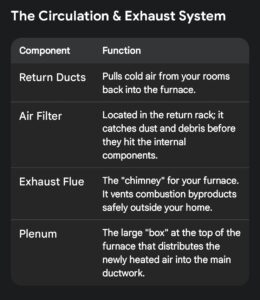
6. Flame Sensor: Built-In Safety Protectioncirculation and exhaust system, listing components and their functions

The flame sensor is a small metal rod near the burners.

Its only job is to detect whether a flame is present.

If gas flows but no flame is detected, the system immediately shuts down to prevent dangerous gas buildup.

A dirty flame sensor is one of the most common causes of furnace short-cycling.

Why Furnace Maintenance Matters

Your furnace runs through this cycle dozens of times per day during the winter.

Regular maintenance helps:

  • Improve energy efficiency
  • Lower heating bills
  • Prevent carbon monoxide risks
  • Extend system lifespan
  • Reduce emergency breakdowns

One of the simplest things homeowners can do is regularly change the air filter. A clogged filter restricts airflow and strains the entire system.

When to Call a Professional HVAC Technician

Contact a licensed HVAC professional if you notice:

  • Strange smells
  • Loud or unusual noises
  • Short-cycling (turning on and off frequently)
  • Uneven heating
  • Rising energy bills

Routine furnace tune-ups can prevent small issues from turning into expensive repairs.


Pro Tip:

Don’t wait until you’re experiencing problems. Preventative maintenance pays for itself — both now and in the long run. With Choice Aire’s First Choice Preventative Maintenance Program [link to request form], you’ll enjoy regularly scheduled tune-ups that ensure maximum efficiency, lower monthly energy costs, preferred pricing on replacement parts, and prioritized service when you need it most.


Stay Warm with Professional Furnace Care

Understanding your furnace is the first step in protecting your home’s comfort and safety.

If you have questions about your heating system or need professional furnace maintenance, the certified HVAC technicians at Choice Aire are here to help.

If you live in Stark County, Summit County, Medina County, or Portage County, our certified HVAC technicians are here to help with furnace maintenance, repair, and seasonal tune-ups. Choice Aire proudly serves homeowners throughout Northeast Ohio with trusted heating solutions.

Request an estimate today!

Request Service

If you have an HVAC emergency, we highly recommend calling us at our 24/7 emergency service number so we can quickly address your concerns. Call 330-945-6223 to reach us immediately. For all other service requests, feel free to complete the form below, and a member of our team will respond during regular business hours.
Please enable JavaScript in your browser to complete this form.
Name

Request a Maintenance Plan

Please enable JavaScript in your browser to complete this form.

Request an Estimate

Please enable JavaScript in your browser to complete this form.
Address
To help us better assist you please let us know what service you need: